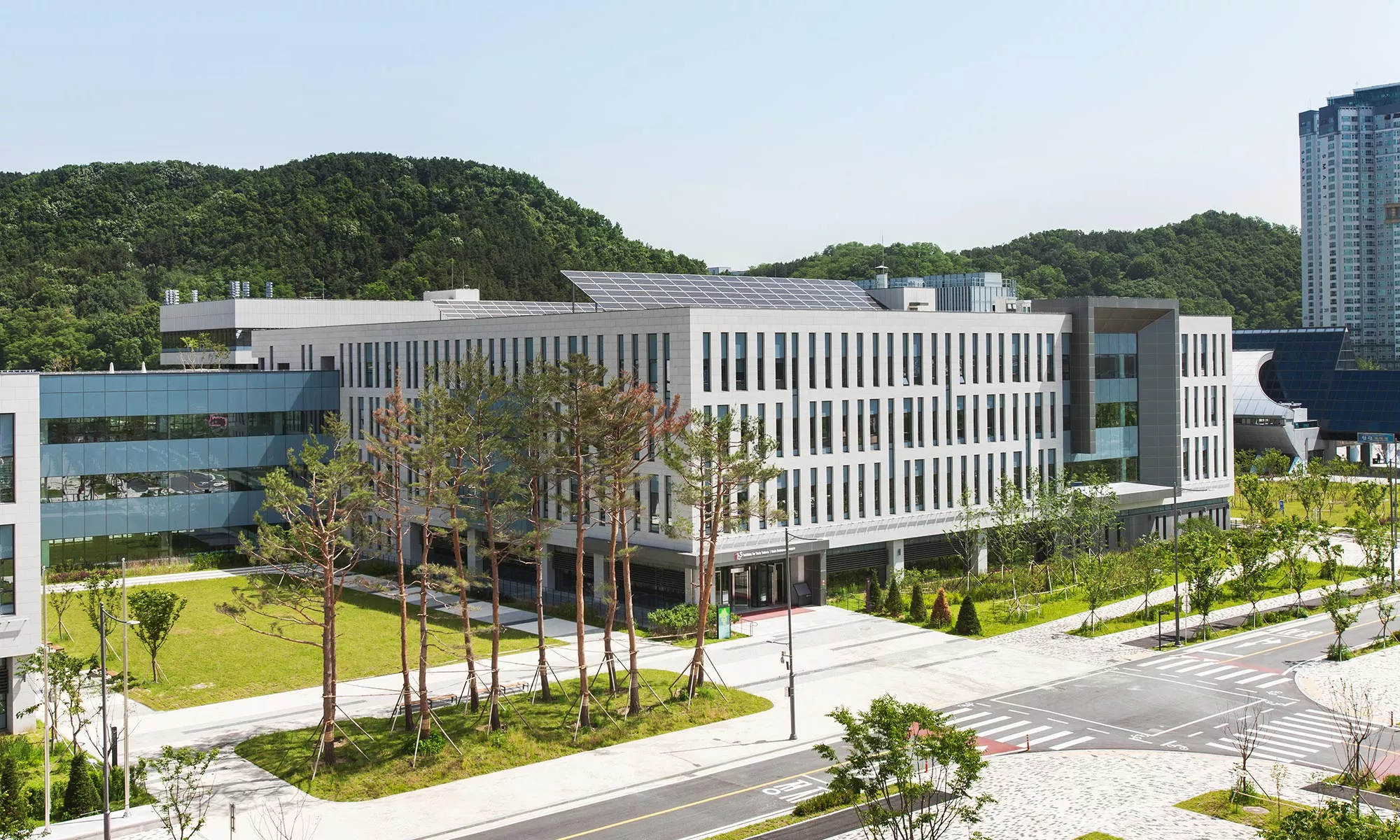

• 2019-1 IBS Workshop on Graph Theory

    Room B234 IBS (기초과학연구원)

    Invited Speakers Jeong Han Kim (김정한), KIAS, Seoul Martin Balko, Charles University, Prague Dániel Gerbner, Alfréd Rényi Institute of Mathematics, Budapest Cory T. Palmer, University of Montana, Missoula Boram Park (박보람), Ajou University Dong Yeap Kang (강동엽), KAIST Schedule Feb. 11, 2019, Monday 1:30pm-2:20pm Jeong Han Kim: Entropy and sorting 2:20pm-3:10pm Cory T. Palmer: Generalized Turán

  • Andreas Holmsen, Large cliques in hypergraphs with forbidden substructures

    Room B232 IBS (기초과학연구원)

    A result due to Gyárfás, Hubenko, and Solymosi, answering a question of Erdős, asserts that if a graph $G$ does not contain $K_{2,2}$ as an induced subgraph yet has at least $c\binom{n}{2}$ edges, then $G$ has a complete subgraph on at least $\frac{c^2}{10}n$ vertices. In this paper we suggest a "higher-dimensional" analogue of the notion

  • Jon-Lark Kim (김종락), Introduction to Boolean functions with Artificial Neural Network

    Room B232 IBS (기초과학연구원)

    A Boolean function is a function from the set Q of binary vectors of length n (i.e., the binary n-dimensional hypercube) to $F_2=\{0,1\}$. It has several applications to complexity theory, digital circuits, coding theory, and cryptography. In this talk we give a connection between Boolean functions and Artificial Neural Network. We describe how to represent

  • Rose McCarty, Circle graphs are polynomially chi-bounded

    Room B232 IBS (기초과학연구원)

    Circle graphs are the intersection graphs of chords on a circle; vertices correspond to chords, and two vertices are adjacent if their chords intersect. We prove that every circle graph with clique number k has chromatic number at most $4k^2$. Joint with James Davies.

  • Sang June Lee (이상준), On strong Sidon sets of integers

    Room B232 IBS (기초과학연구원)

    Let $\mathbb N$ be the set of natural numbers. A set $A\subset \mathbb N$ is called a Sidon set if the sums $a_1+a_2$, with $a_1,a_2\in S$ and $a_1\leq a_2$, are distinct, or equivalently, if \ for every $x,y,z,w\in S$ with $x<y\leq z<w$. We define strong Sidon sets as follows: For a constant $\alpha$ with $0\leq

  • Xin Zhang (张欣), On equitable tree-colorings of graphs

    Room B232 IBS (기초과학연구원)

    An equitable tree-$k$-coloring of a graph is a vertex coloring using $k$ distinct colors such that every color class (i.e, the set of vertices in a common color) induces a forest and the sizes of any two color classes differ by at most one. The minimum integer $k$ such that a graph $G$ is equitably

  • Lars Jaffke, A complexity dichotomy for critical values of the b-chromatic number of graphs

    Room B232 IBS (기초과학연구원)

    A $b$-coloring of a graph $G$ is a proper coloring of its vertices such that each color class contains a vertex that has at least one neighbor in all the other color classes. The $b$-Coloring problem asks whether a graph $G$ has a $b$-coloring with $k$ colors. The $b$-chromatic number of a graph $G$, denoted

  • Jinyoung Park (박진영), The number of maximal independent sets in the Hamming cube

    Room B232 IBS (기초과학연구원)

    Let $Q_n$ be the $n$-dimensional Hamming cube (hypercube) and $N=2^n$. We prove that the number of maximal independent sets in $Q_n$ is asymptotically $2n2^{N/4}$, as was conjectured by Ilinca and Kahn in connection with a question of Duffus, Frankl and Rödl. The value is a natural lower bound derived from a connection between maximal independent

  • Suil O (오수일), An odd [1,b]-factor in regular graphs from eigenvalues

    Room B232 IBS (기초과학연구원)

    An odd $$-factor of a graph is a spanning subgraph $H$ such that for every vertex $v \in V(G)$, $1 \le d_H(v) \le b$, and $d_H(v)$ is odd. For positive integers $r \ge 3$ and $b \le r$, Lu, Wu, and Yang gave an upper bound for the third largest eigenvalue in an $r$-regular graph with even number of

  • Patrice Ossona de Mendez, A model theoretical approach to sparsity

    Room B232 IBS (기초과학연구원)

    We discuss how the model theoretic notion of first-order transduction allows to define a notion of structural sparsity, and give some example of applications, like existence of low shrub-depth decompositions for tranductions of bounded expansion classes, characterization of transductions of classes with bounded pathwidth, decompositions of graphs with bounded rank-width into cographs.