
• 2026 Summer School on Combinatorics and Algorithms (2026 조합론 및 알고리즘 여름학교)

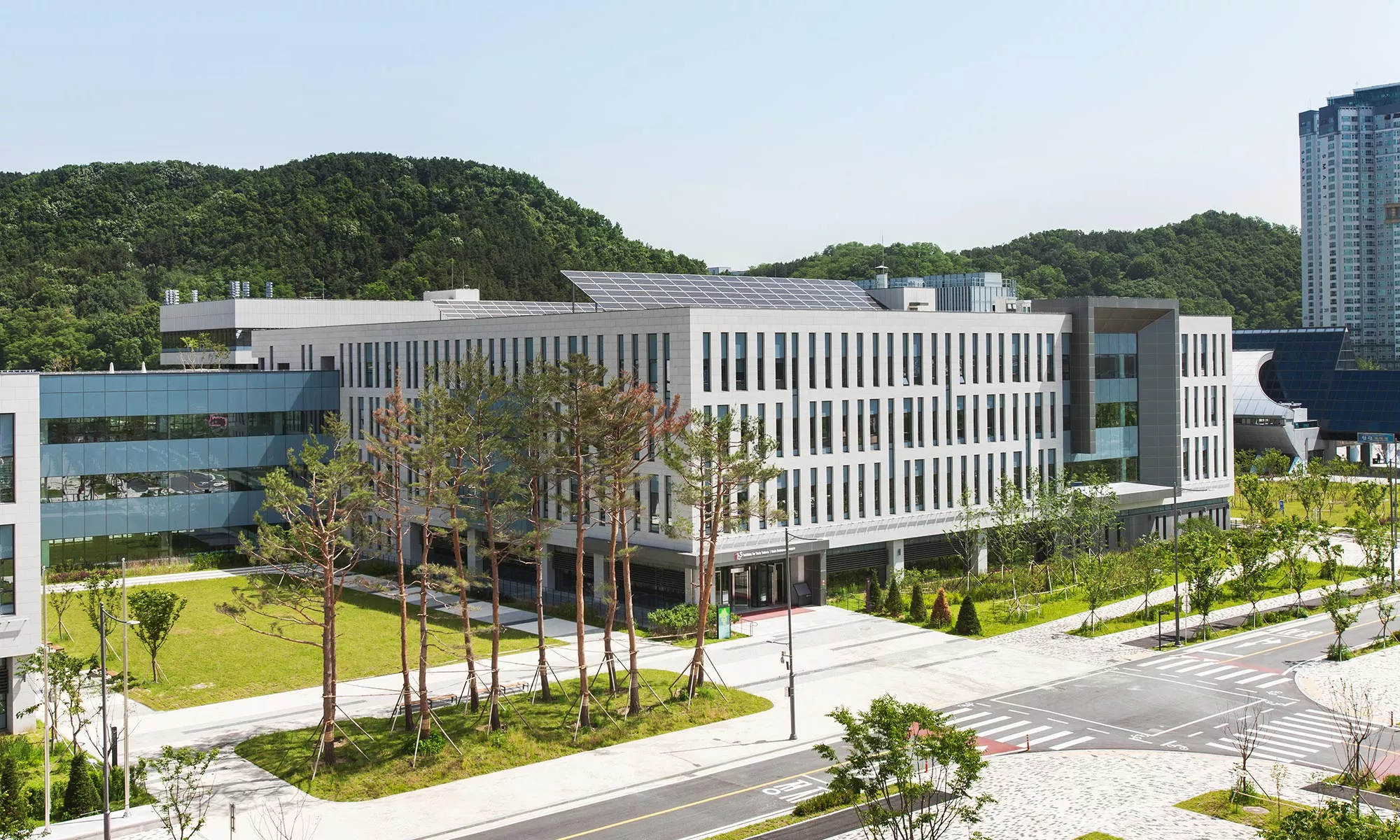
    Bldg. E11, KAIST

    The 2026 Summer School on Combinatorics and Algorithms is a venue for students and early-career researchers to learn selected topics in theoretical computer science and discrete mathematics. It will be a great opportunity for young and aspiring researchers to study topics which are important but not covered during the lectures in the university classes. Website:

  • Jinyoung Park (박진영), A reformulation of Talagrand’s Discrete Convexity Conjecture

    Room B332 IBS (기초과학연구원)

    The "Convexity Conjecture" by Talagrand asks, roughly speaking, whether one can "create convexity" in a bounded number of steps regardless of the dimension of the ambient space. Talagrand also proposed a discrete version of this conjecture, calling it his "lifetime favorite problem" and offering a $1,000 prize for its solution. While the continuous version of

  • Ben Lund, Incidences between points and n-flats in PG(n+d,q)

    Room B332 IBS (기초과학연구원)

    Let $P$ be a set of points in $PG(n+d,q)$, and let $L$ be a set of $n$-flats. Here, $n$-flat is a short name for $n$-dimensional projective subspaces. A classical bound of Haemers, rediscovered in an influential paper of Vinh, gives an upper bound on the difference between the number of incidences between $P$ and $L$

  • Olga Medrano Martín del Campo, Epsilon-saturation for Littlestone classes and stable graphs

    Room B332 IBS (기초과학연구원)

    We introduce the concept of the saturation of a (bi)graph: the union closure after inductively adding its virtual elements, which are weighted ε-good (respectively ε-excellent sets) as in the Stable Regularity Lemma. In the Littlestone class and stable graph case, we show that if the saturation has bounded Littlestone dimension, then it is the smallest

  • Gabriëlle Zwaneveld, On Seymour-tight orientations

    Room B332 IBS (기초과학연구원)

    I discuss 'almost counterexamples' to Seymour's second neighbourhood conjecture. In what we call Seymour-tight orientations, the size of the first neighbourhood of each vertex equals the size of its second neighbourhood. We give several examples and constructions. Specifically, we prove that the class of Seymour-tight orientations is closed under taking (generalized) lexicographic products. Moreover, the

  • David R. Wood, The Erdős-Sós Theorem

    Room B332 IBS (기초과학연구원)

    We present an exposition of a proof, discovered by GPT-6 Astra, of the Erdős-Sós Conjecture, which states that every graph with average degree greater than t−2 contains every tree on t≥2 vertices.

  • David R. Wood, Proof of the Clustered Hadwiger Conjecture

    Room B332 IBS (기초과학연구원)

    Hadwiger famously conjectured that every $K_h$-minor-free graph is properly $(h-1)$-colourable. This talk will present the following improper analogue of Hadwiger's Conjecture: for fixed $h$, every $K_h$-minor-free graph is $(h-1)$-colourable with monochromatic components of bounded size. The number of colours is best possible regardless of the size of monochromatic components. This solves an open problem of

  • Daniel McGinnis, Multi-generic initial ideals, regularity, and the optimal colorful fractional Helly theorem for $d$-Leray complexes

    Room B332 IBS (기초과학연구원)

    A celebrated result of Bayer and Stillman from 1987 states that for a homogeneous ideal $I$ of a polynomial ring $S$, the regularities of $S/I$ and $S/\textrm{GIN}(I)$ are the same under the reverse lexicographic monomial ordering, where $\textrm{GIN}(I)$ is the generic initial ideal. If $R$ is a polynomial ring whose variables are subdivided into disjoint

  • Julien Codsi, Recent progress in the tree-⍺ world

    Room B332 IBS (기초과학연구원)

    Treewidth is a graph parameter commonly used to quantify how "close" a graph is to a tree. Although it is a cornerstone of structural graph theory and algorithm design, it is nearly useless for algorithmic purposes in many dense graph classes. In this talk, we discuss the tree-independence number, a more versatile graph parameter that

  • 2026 Combinatorics Workshop (2026 조합론 학술대회)

    Konjiam Resort, EW Village, B2, Meeting Room OPUS2

    Combinatorics Workshop (조합론 학술대회) is an annual conference for researchers in combinatorics and related areas in Korea. It was started in 2004 by the Yonsei University BK21 Research Group. Since 2013, this workshop has been advised by the committee of discrete mathematics of the Korean Mathematical Society. Website: https://cw2026.combinatorics.kr/en/ Venue Konjiam Resort, EW Village, B2,